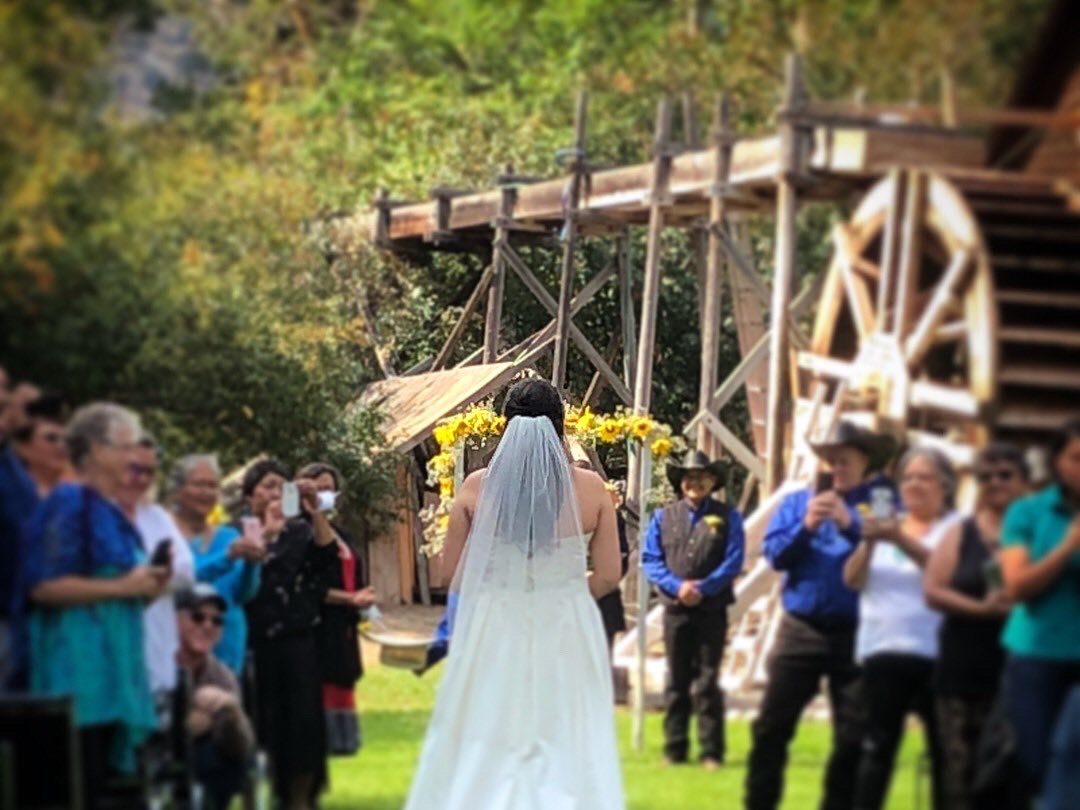
Hosting weddings at a place like the Grist Mill can seem obvious. The landscape is striking, the buildings are historic, and people are naturally drawn to celebrate there. But for me, weddings were never just a revenue opportunity—they were a deliberate strategy for keeping heritage alive.
Heritage sites exist because communities once cared deeply enough to fight for them. Over time, however, many of those original champions age out, and the places they protected risk becoming static—treated with reverence, but no longer woven into the lives of new generations. Abstract respect can preserve a site physically, but it rarely sustains it culturally. Without fresh, personal connections, even the most meaningful places can begin to fade.
Weddings offered a way to walk a careful line. They are watershed life moments—intimate, emotionally charged, and remembered long after the day itself has passed. When the significance of the moment aligns with the character of the place, the place stops being abstract. The site becomes part of the story people tell about their own lives, not just a backdrop for someone else’s history.
My role was to steward that balance: allowing the site to host deeply personal celebrations without sacrificing its integrity or collapsing into generic event production. This meant setting clear boundaries around use, guiding couples toward choices that worked with the landscape rather than against it, and ensuring that the historic fabric of the site remained legible and respected throughout the process. Profit and convenience were never allowed to override character.
The impact of this approach unfolded over time. Wedding couples returned as visitors. Guests came back with family members, or dropped in years later while passing through. When the site faced challenges, it was often people who had married there—or attended a wedding there—who showed up as advocates, donors, and informal ambassadors. The place lingered in photographs, memories, and stories, quietly reinforcing its relevance.
Over time, it became clear that weddings functioned as a form of long-horizon stewardship. When people are allowed to anchor their own life events in a historic place, care follows naturally. The work wasn’t about using heritage as a backdrop, but about letting it become part of people’s lives.