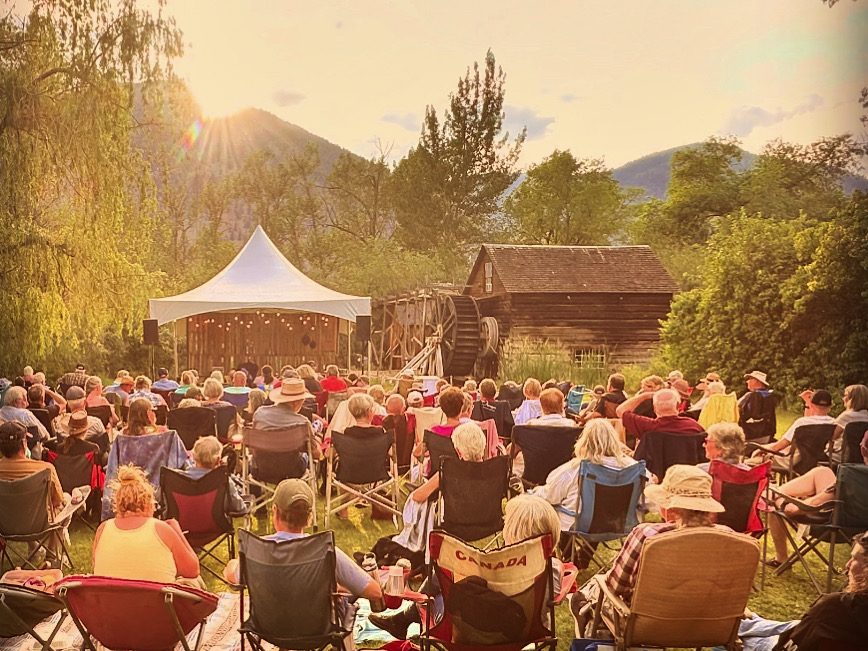
Between 2012 and 2025, I developed the Grist Mill concert series from four tentative, experimental shows into a twelve-concert seasonal program featuring nationally recognized artists such as Barney Bentall, The Grapes of Wrath, and other established touring acts. What began as a question—could live music belong in a rural heritage site without feeling gimmicky?—became one of the Mill’s most reliable cultural and financial pillars.
The series worked because it was never treated as a bolt-on attraction. Artist selection was guided by fit rather than fame: musicians whose work emphasized storytelling, roots traditions, craft, and emotional honesty—qualities that resonated naturally with the site’s history and landscape. The venue itself, with a capacity under 200, was intentionally intimate. There was no backstage mystique, no corporate polish. Artists played to attentive crowds, audiences listened closely, and both left feeling they’d shared something specific to that place.
Over time, that intimacy became the brand. Touring musicians talked to one another. Agents learned that the Grist Mill offered something different from bars, clubs, or festivals. Audiences began traveling from the Okanagan, the Lower Mainland, and beyond, often making a full evening (or weekend) of it—dinner, a walk through the site, and a concert in a heritage setting. Repeat performers and repeat audiences became the norm, not the exception.
Behind the scenes, the series was an exercise in pragmatic cultural production. I handled artist booking and negotiation, technical production in a non-purpose-built historic structure, volunteer and staff coordination, insurance, accessibility considerations, weather contingencies, marketing, ticketing, and financial management within narrow seasonal margins. Success depended on knowing which risks were worth taking, which artists would draw in that context, and how to deliver consistently excellent experiences without overextending the operation.
High-quality programming doesn’t require urban scale or institutional budgets. It requires knowing your audience, caring for artists, and executing well. When those things align, people travel, return, and bring others. Culture becomes infrastructure.