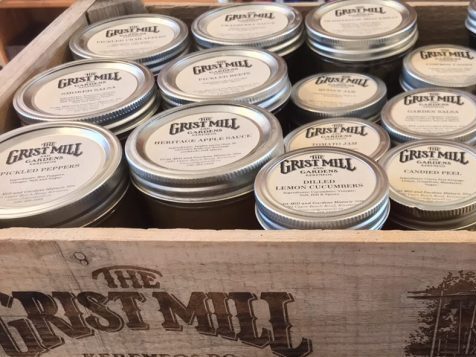
Our “Pantry Share” existed to solve a practical problem: pre-season cash flow. At a heritage site like the Grist Mill, much of the work—and cost—lands months before gates open. Gardens need attention, supplies need buying, ingredients come into season, and staff hours accumulate long before visitor revenue arrives. Rather than treating that gap as something to endure, I looked for a way to design around it.
The solution adapted the Community Supported Agriculture model to preserves. Members purchased “shares” in advance and chose from the preserves we produced—often including small batches reserved specifically for Pantry Share members. For us, that meant early cash, planning confidence, and the freedom to act when opportunity showed up. For members, it meant supporting a place they cared about while stocking their pantries with something genuinely useful and well made.
The program leveraged what we already had: heritage gardens with rare vegetable varieties, sixty heritage apple trees, and strong relationships with Similkameen Valley farmers who could grow specific crops to order. By securing funding upfront, we reduced financial risk for both the Mill and our growers, while ensuring access to peak-season ingredients like quince, sour cherries, and heritage varieties that could be processed immediately rather than stored or wasted.
As the program matured, it became increasingly creative and opportunistic. In our busiest seasons, we produced more than 150 different products—some in very small batches—specifically for our Pantry Share members. Farmers began calling with unexpected surpluses. Community members offered what they had: rhubarb, horseradish, even medlars and tayberries. If it was interesting and edible, we could usually find a way to turn it into something lasting.
The program also created conversation. People asked about unfamiliar ingredients and old recipes—mushroom ketchup, quince paste, heritage mustards—and those questions opened the door to history, technique, and food culture. The Pantry Share became less about transactions and more about an ongoing relationship with people who were curious, engaged, and paying attention.
Distribution reinforced that relationship. Rather than asking people to come to us, we delivered Pantry Share orders directly to their doors across the region, meeting supporters where they were and extending the site’s presence well beyond its physical boundaries. Preserves made that possible: they travel well, they keep, and they reward foresight.
What began as a cash-flow solution ended up strengthening operations, deepening relationships, and giving us room to think ahead. Pantry Share ultimately stored more than food—it stored time, trust, and resilience.